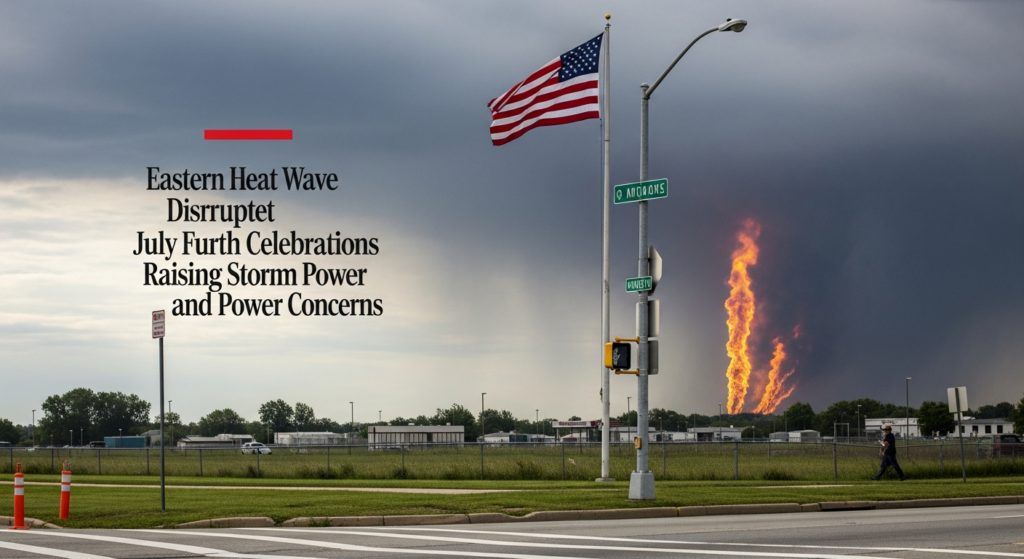
An intense heat wave gripped much of the eastern United States over the recent July Fourth holiday weekend, disrupting planned celebrations and fueling concerns about the strain on power grids and the potential for severe weather. Temperatures soared across multiple states, prompting advisories and forcing adjustments to traditional holiday activities.
The extreme heat was a significant factor for many observing the holiday, impacting outdoor events and gatherings. While specific local event cancellations or modifications in Northville were not detailed in the provided information, the broader regional trend indicated widespread disruption. The prolonged period of high temperatures placed considerable demand on electrical systems as residents relied heavily on air conditioning.
Beyond the immediate impact on holiday plans and energy consumption, the persistent heat also raised concerns among meteorologists and emergency planners about its potential to fuel storm development. Hot, humid conditions can provide the necessary ingredients for thunderstorms, and in some areas, the heat wave coincided with heightened awareness of wildfire risks and the general strain on infrastructure.
National weather outlets characterized the heat as a direct disruption to the holiday weekend, rather than a generalized seasonal condition. This framing underscores the immediate and acute nature of the weather event. For Northville and its surrounding communities, the implications of such widespread heat events extend to public health advisories, potential utility demand management, and the readiness of emergency services for weather-related incidents.
While the provided information focuses on the broader national and regional impacts, local authorities and utility providers typically monitor such conditions closely. Residents are advised to stay informed about any specific local advisories or utility conservation notices that may be issued in response to extreme heat. The sustained high temperatures serve as a reminder of the challenges posed by increasingly severe weather patterns on community infrastructure and daily life.
As the heat wave persisted, the focus remained on managing immediate public safety concerns, ensuring the stability of the power grid, and monitoring the evolving weather patterns. The confluence of holiday activity and extreme temperatures presented a unique set of challenges for communities across the eastern seaboard.