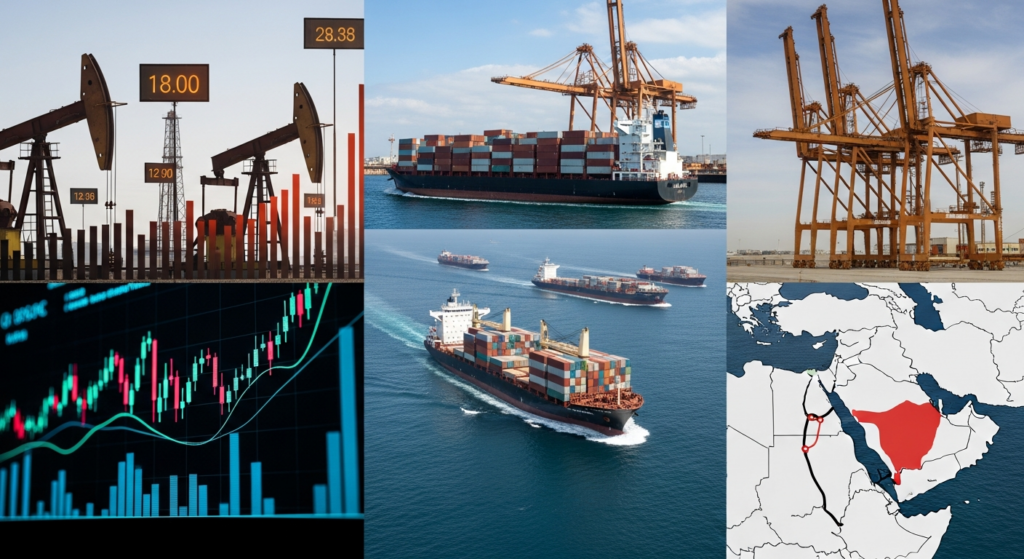
Global financial markets are exhibiting volatility as renewed tensions around the Strait of Hormuz raise concerns about oil supply disruptions. The developments have directly impacted crude oil prices and equity markets, with investors reassessing risk associated with shipping routes and potential geopolitical escalation.
Business coverage has closely tied recent market movements to these geopolitical events. Analysts are observing how the potential for conflict in a critical global transit zone for oil affects supply chain stability and, consequently, energy costs. This uncertainty is leading to a more cautious approach from investors, who are weighing the immediate financial implications against broader economic impacts.
The reactions observed in both the equity and crude oil markets reflect a broader investor sentiment. In the stock market, companies with significant exposure to energy prices or global logistics may see their valuations adjusted. Simultaneously, crude oil prices are susceptible to fluctuations based on perceived threats to supply. Market reports indicate that investors are actively factoring in these shipping and conflict risks when making investment decisions.
While the immediate focus is on the financial markets’ response, the underlying geopolitical situation in the Strait of Hormuz has broader implications. The region is a vital chokepoint for a significant portion of the world’s oil supply, and any disruption can have far-reaching economic consequences. The current market behavior suggests that investors are anticipating potential price increases and supply constraints.
Experts are monitoring the situation closely, with particular attention paid to official statements from involved nations and international bodies. The duration and intensity of these tensions will likely dictate the sustained impact on global markets. For businesses and consumers alike, the situation underscores the interconnectedness of global politics and economic stability.
In Northville, the effects of these global market shifts may not be immediately apparent at the consumer level, but they can influence the broader economic climate. Local businesses, particularly those with ties to manufacturing or industries reliant on stable energy prices, may experience indirect impacts. The automotive sector, a significant employer in the Northville region, is particularly sensitive to fluctuations in oil prices and global supply chain reliability. Fluctuations in global oil markets can affect the cost of raw materials and transportation, potentially influencing production costs and consumer demand for vehicles.
Why it matters in Northville:
The global market reactions to tensions in the Strait of Hormuz, while originating far from Northville, can have tangible effects on the local economy. Companies like Tenneco and Inteva Products, which operate significant facilities in the Northville area and are integral to the automotive supply chain, are sensitive to global energy prices and shipping stability. Fluctuations in these areas can influence their operational costs, investment decisions, and potentially their workforce planning. Furthermore, a broader economic slowdown triggered by sustained geopolitical instability could impact consumer spending at local businesses in the Downtown Northville Historic District and affect revenue streams for institutions such as Northville Public Schools, which rely on local tax bases that are themselves influenced by the health of major regional employers. The interconnectedness of the global economy means that events in distant regions can reverberate through local commerce and employment.