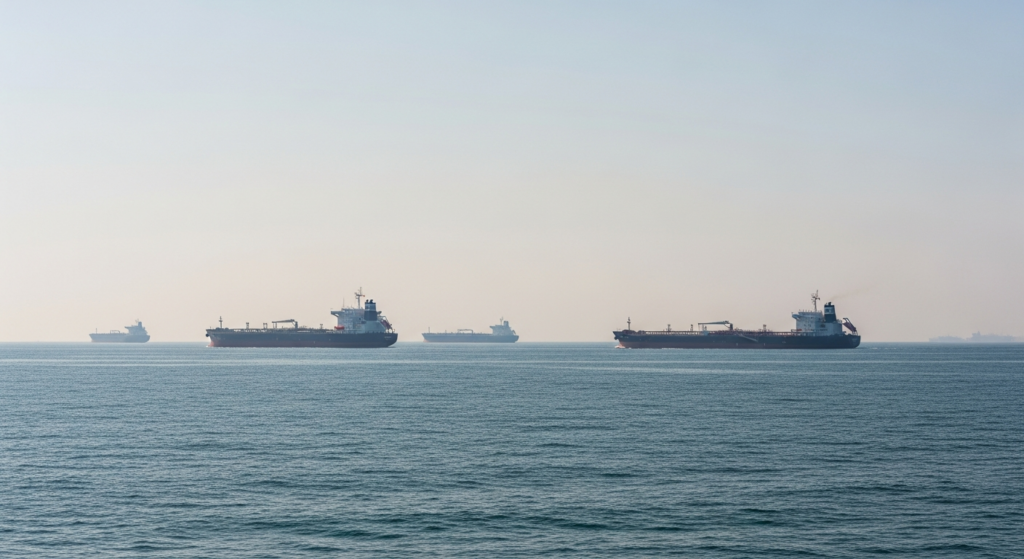
International markets are closely monitoring a recent escalation in U.S.-Iran tensions around Iranian ports and the Strait of Hormuz, a critical chokepoint for global crude oil shipments. The renewed hostilities, which emerged during the July 15 news cycle, have directly impacted energy markets, pushing oil prices to a one-month high.
Reports from independent international and business coverage indicate that the U.S. has resumed a blockade on Iran, a move directly linked to the increased friction in the region. This action is a significant development in the ongoing national security and shipping context between the two nations.
The Strait of Hormuz, a narrow waterway connecting the Persian Gulf to the Gulf of Oman, is indispensable for the transit of oil. Approximately one-fifth of the world’s total petroleum liquids consumption, including crude oil and refined products, passes through this strategic passage. Any disruption or perceived threat to shipping in this area invariably leads to increased volatility in global energy prices.
Energy market analysts have tied the recent price surge directly to the heightened risk associated with traversing the Strait. The uncertainty generated by the U.S.-Iran conflict casts a shadow over the reliability of crude oil flows, prompting traders and consumers alike to factor in a higher risk premium. This situation underscores the delicate balance of global energy supply and the significant geopolitical factors that can influence it.
The U.S. administration’s decision to reimpose a blockade is a direct response to the escalating hostilities. While details regarding specific targeting or tactical operations remain limited to confirmed conflict and shipping risks, the broader implications for international trade and energy security are substantial. The U.S. government has stated its commitment to ensuring freedom of navigation while also addressing security concerns in the region.
This escalation also brings renewed attention to the broader geopolitical landscape. The Strait of Hormuz has historically been a flashpoint, and any increase in military activity or diplomatic tension invariably sends ripples through international markets. The current situation highlights the interconnectedness of global energy markets and the potential for regional conflicts to have far-reaching economic consequences.
Financial markets are now grappling with the implications of this renewed instability. The rise in oil prices could have a cascading effect on inflation, consumer spending, and overall economic growth worldwide. Businesses that rely on stable energy prices, from transportation companies to manufacturers, are particularly vulnerable to these fluctuations.
As the situation develops, observers will be watching for any further actions by either the U.S. or Iran, as well as the response from other international powers. The stability of the Strait of Hormuz remains a paramount concern for the global economy, and any prolonged period of heightened tension could lead to more significant and lasting impacts on energy supplies and prices.
Why it matters in Northville
The global fluctuations in oil prices and shipping security, driven by events such as the U.S.-Iran escalation in the Strait of Hormuz, have a tangible impact on the Northville area. Residents and businesses in Northville, like those across the country, are sensitive to changes in energy costs. Fluctuations in oil prices can affect the cost of gasoline at local stations, influence heating and cooling expenses for homes and businesses, and impact the prices of goods and services that rely on transportation. For employers in Northville, such as Tenneco or Inteva Products, which are integral to the automotive supply chain, stable energy costs are crucial for operational efficiency and profitability. Similarly, local institutions like Northville Public Schools and Trinity Health — Northville Health Center, which manage budgets and service delivery, are indirectly affected by broader economic shifts tied to global energy markets. The interconnectedness of the global economy means that even distant geopolitical events can translate into local economic realities for Northville residents.