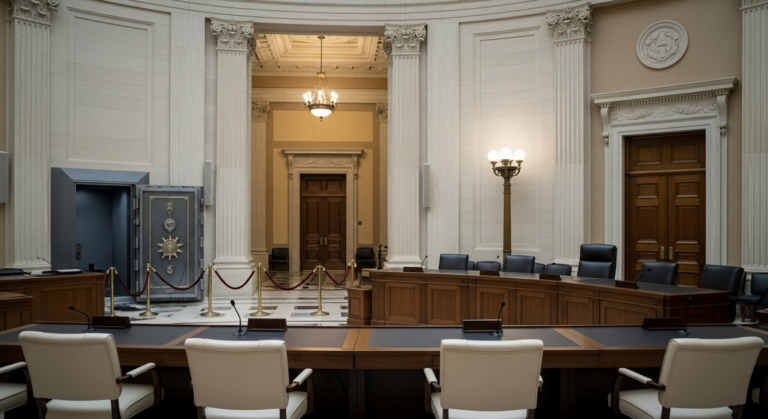
Supreme Court Justices Elena Kagan and Amy Coney Barrett appeared before a congressional panel on Thursday to discuss the judiciary’s budget and security needs. The joint testimony marked a rare public engagement by sitting justices on matters of the Court’s financial operations and protective measures.
The hearing, which focused on the Supreme Court’s budget requests and the security protocols in place for justices and the building, provided a direct line of communication between the Court and the legislative branch regarding its operational requirements. Independent coverage described the appearance as a rare public budget-related hearing involving sitting justices.
While the justices’ testimony centered on administrative and security concerns, the appearance itself drew attention given the Court’s typically private deliberations on internal matters. The focus remained on the practical needs of the institution, including staffing, technology, and physical security enhancements, rather than on specific legal cases or policy decisions.
Sources familiar with the proceedings indicated that the justices aimed to provide a clear picture of the resources necessary to maintain the Court’s functions and ensure the safety of its personnel. The hearing did not delve into speculative discussions about potential case outcomes, adhering to guidelines that discourage such commentary from sitting justices in public forums.
The appearance by Justices Kagan and Barrett underscores a period of increased scrutiny and discussion surrounding the Supreme Court’s operational framework. The testimony offered lawmakers insight into the day-to-day requirements of the nation’s highest court, particularly concerning its budget and the security measures deemed essential for its operation.
The justices’ presentation was framed around the practicalities of running a federal institution that handles matters of national importance. The discussion touched upon the evolving security landscape and the corresponding need for adequate funding to address these challenges. The proceedings were characterized by a direct exchange of information, with the justices outlining the Court’s needs and the congressional panel receiving the details.
This engagement serves as a notable instance of the Supreme Court engaging in public discourse on its administrative and security infrastructure. The testimony provided a transparent view of the Court’s budgetary considerations and the measures taken to safeguard its operations and personnel. The justices’ participation highlighted the importance of these foundational elements in supporting the Court’s judicial responsibilities.
Why it matters in Northville:
While the Supreme Court’s budget and security are federal matters, the principles discussed have broad implications for public institutions. The need for adequate funding and robust security measures to ensure the effective and safe operation of governmental bodies is a constant consideration. For Northville, this includes ensuring that local institutions, such as Northville Public Schools and the City of Northville itself, have the necessary resources to maintain their services and protect their staff and facilities. The discussions surrounding the Supreme Court’s operational needs serve as a reminder of the foundational importance of administrative stability and security for all levels of government, from the highest federal courts to local municipal services that residents rely on daily.